
Table of Contents
- Why Gluten-Free Cookies Fail (And How to Fix Them)
- The Best Gluten-Free Flour Blend for Cookies
- Classic Gluten-Free Chocolate Chip Cookies
- Gluten-Free Sugar Cookies and Vegan Variations
- Tips for Baking Gluten-Free Cookies That Taste Great
- Common Gluten-Free Cookie Baking Mistakes to Avoid
- Storing, Freezing, and Reheating Gluten-Free Cookies
- Conclusion: Baking Better Gluten-Free Cookies
- Frequently Asked Questions
Last Updated: September 24, 2026
Why Gluten-Free Cookies Fail (And How to Fix Them)
Most gluten-free cookie recipes fail because gluten provides structure and traps moisture; remove it and cookies spread flat or bake up dry and gritty.
The Best Gluten-Free Flour Blend for Cookies
The best gluten-free flour blend for cookies mixes a starchy flour, a whole-grain flour, and a binder, not a single flour. White rice flour, oat flour, and tapioca starch deliver structure, flavor, and chew.
- 40% white rice flour (structure, neutral flavor)
- 30% oat flour (whole-grain taste, tenderness)
- 20% tapioca starch (chew, browning)
- 10% cornstarch (lightness)
Store-Bought Blends: What to Look For on the Label
If you buy a blend, check three label items: the first ingredient (a whole grain like rice, sorghum, or millet is good), whether a binder is included (xanthan, guar, or psyllium), and protein per serving.
Common commercial blends fall into two camps:
- Binder-included blends (most mass-market all-purpose GF blends): convenient, but you must not add extra xanthan gum or the cookie turns gummy.
- Binder-free blends (often labeled "1-to-1" but check the panel): you control the binder, which is better for chewy or vegan cookies where you want to tune the texture.
Almond Flour, Oat Flour, and All-Purpose Blends Compared
Each flour type changes the texture profile of your cookie, so match the flour to the result you want.
| Flour Type | Texture Result | Best For | Watch Out For |
|---|---|---|---|
| Almond flour | Soft, moist, rich | Chewy cookies, paleo batches | Burns fast, needs more binder |
| Oat flour | Hearty, tender | Oatmeal and sugar cookies | Can taste earthy if overused |
| All-purpose GF blend | Closest to wheat | Chocolate chip, drop cookies | Varies by brand, check for binder |
| Coconut flour | Dense, dry | Small batches only | Absorbs huge amounts of liquid |
| Sorghum flour | Mild, wheat-like | Sugar cookies, snickerdoodles | Can taste slightly bitter if over 30% of blend |
| Millet flour | Light, slightly sweet | Delicate cookies, shortbread | Goes rancid faster than rice flour |
The Cost-Per-Batch Reality of Gluten-Free Baking
Gluten-free flours cost more per pound than wheat, and small bags widen the gap. A batch built from bulk rice flour, oat flour, and tapioca starch typically costs less than one using a commercial all-purpose GF blend.
Three habits cut the cost without hurting texture:
- Buy the base flours in bulk (rice flour, tapioca starch, cornstarch) and only the specialty flours in small bags.
- Mix your own all-purpose blend in a large batch and store it in an airtight container, you control the ratio and the binder.
- Skip single-use flours like coconut flour unless a recipe truly needs them; they are expensive and hard to substitute.
Xanthan Gum and Binding Agents: How Much Is Enough?
Xanthan gum is the most common binder, and the right amount is usually 1/2 to 1 teaspoon per cup of flour blend. Too little crumbles; too much turns gummy.
- Psyllium husk: best for chewy, whole-grain cookies; use 1 teaspoon per cup
- Ground flaxseed: works as an egg replacer; use 1 tablespoon mixed with 3 tablespoons water per egg
- Guar gum: similar to xanthan but less elastic; use slightly more
- Chia seeds: good for vegan batches; gel them in water first
Classic Gluten-Free Chocolate Chip Cookies
The best gluten free chocolate chip cookies start with room temperature butter, a balanced flour blend, and a mandatory fridge chill. Skip the chill and you get flat, greasy cookies.
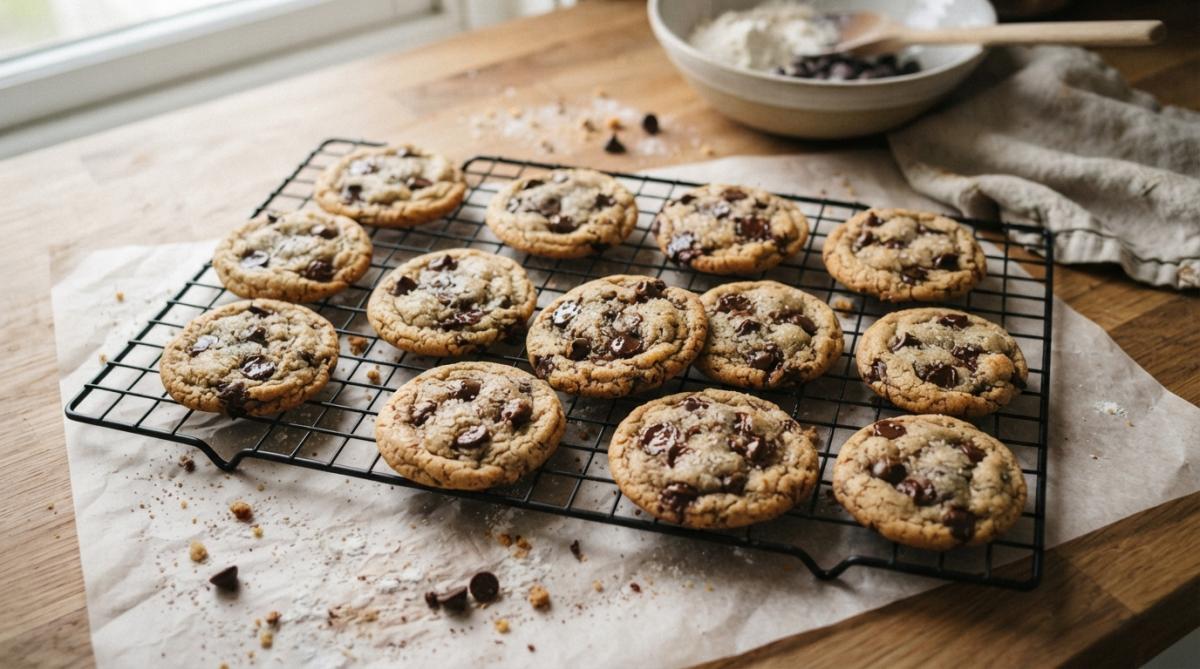
Here is the method we follow:
- Cream room temperature butter with brown and white sugar until light, about 3 minutes.
- Add eggs and pure vanilla extract, then beat until smooth.
- Whisk your flour blend with baking soda and sea salt in a separate bowl.
- Fold dry into wet until just combined, then stir in chocolate chips.
- Chill the dough for at least 1 hour, ideally overnight.
- Scoop with a cookie scoop onto parchment paper lined trays.
- Bake at 350°F (175°C) until the edges turn golden brown but the centers look underdone.
- Rest on the tray 5 minutes, then move to a wire cooling rack.
Chewy vs. Crispy: Adjusting Your Texture Profile
Chewy cookies need more brown sugar, more binder, and a shorter bake. Crispy cookies need more white sugar, less moisture, and a longer, lower bake.
Gluten-Free Sugar Cookies and Vegan Variations
Gluten-free sugar cookies hold their shape when you chill the dough and roll it between two sheets of parchment paper, which prevents sticking and extra flour.
Dairy-Free and Refined Sugar-Free Swaps
Dairy-free and refined sugar-free versions work with direct swaps, but each changes the dough, so adjust slowly.
- Butter to coconut oil or vegan butter: use the same amount, keep it cool but soft
- White sugar to coconut sugar: expect a darker color and a deeper flavor
- Brown sugar to coconut sugar plus a splash of molasses: restores the moisture
- Egg to flax or chia gel: 1 tablespoon ground seed plus 3 tablespoons water per egg
Tips for Baking Gluten-Free Cookies That Taste Great
The single biggest tip for baking gluten-free cookies is to rest the dough. Gluten-free flours absorb liquid slowly, so a 30 to 60 minute rest hydrates the starches and evens out texture.
- Weigh your flour instead of scooping it, since gluten-free blends pack unevenly
- Bring butter and eggs to room temperature before you start
- Use parchment paper every time to prevent sticking and burning
- Check your oven temperature with a separate thermometer
- Let cookies cool on the tray before moving them, so they finish setting
Common Gluten-Free Cookie Baking Mistakes to Avoid
The most common gluten-free cookie baking mistakes come down to timing, temperature, and contamination. Fix those three and most batches turn out well.
Watch for these:
- Skipping the chill: warm dough spreads and flattens in the oven
- Overmixing: too much stirring develops a tough, gummy crumb
- Wrong binder amount: too little crumbles, too much turns rubbery
- Guessing at oven temperature: an off oven ruins browning and texture
- Cross-contamination: shared bowls, spoons, or flour dust can undo a celiac-safe batch
The Allergy-Friendly Matrix: One Recipe, Many Diets
Most gluten-free cookie recipes stop at "gluten-free." If your household also avoids nuts, soy, eggs, or dairy, use this matrix to see which bases adapt cleanly and which need a swap.
| Recipe Base | GF | Nut-Free | Soy-Free | Egg-Free | Dairy-Free |
|---|---|---|---|---|---|
| Chocolate chip (butter + egg) | Yes | Yes* | Yes* | Swap egg | Swap butter |
| Chocolate chip (coconut oil + flax) | Yes | Yes | Yes | Yes | Yes |
| Sugar cookie (butter + egg) | Yes | Yes | Yes* | Swap egg | Swap butter |
| Sugar cookie (vegan) | Yes | Yes | Yes | Yes | Yes |
| Oatmeal (with add-ins) | Yes | Check add-ins | Check add-ins | Swap egg | Swap butter |
| Almond flour chewy | Yes | No | Yes | Swap egg | Swap butter |
A few rules make the matrix work in practice:
- Egg-free batches need extra binder. Add 1/4 teaspoon more xanthan gum per cup of flour, or use a flax or chia gel at 1 tablespoon ground seed plus 3 tablespoons water per egg.
- Dairy-free batches need a fat with structure. Coconut oil and vegan butter both work, but vegan butter browns faster, so drop the oven temperature by 10 to 15°F if you see dark edges forming early.
- Nut-free does not mean flour-free. Almond flour is a nut flour. Swap it for oat or sorghum flour at the same weight, not the same volume.
- Soy-free means reading the chips. Many chocolate chips contain soy lecithin. Look for brands that label soy-free explicitly.
High-Altitude Adjustments for Gluten-Free Cookies
Gluten-free flours behave differently at altitude, and most recipes never mention it. Above roughly 3,000 feet, liquids evaporate faster, doughs spread more, and leaveners react more aggressively.
- Reduce baking soda or powder by about 1/4 teaspoon per teaspoon in the recipe.
- Add 1 to 2 tablespoons of extra liquid per batch to offset faster evaporation.
- Increase the oven temperature by 15 to 25°F to set the structure before the dough spreads.
- Chill the dough longer, at least 2 hours, so the fat stays firm going into the oven.
Storing, Freezing, and Reheating Gluten-Free Cookies
Gluten-free cookies stay fresh about 3 to 5 days in an airtight container at room temperature and freeze well for up to 3 months.
A few storage rules keep the texture intact:
- Cool cookies completely before storing, or trapped steam makes them soggy
- Add a slice of bread to the container to keep soft cookies moist
- Keep crispy cookies in a separate tin, since moisture softens them
- Freeze baked cookies in a single layer, then transfer to a freezer bag
- Freeze raw dough balls and bake straight from frozen, adding 2 to 3 minutes
Conclusion: Baking Better Gluten-Free Cookies
Getting the best gluten free cookie recipes right comes down to a balanced flour blend, the correct binder amount, a proper chill, and careful baking. Nail those and gluten-free stops being a compromise.
Frequently Asked Questions
What is the best gluten-free flour to use for making cookies?
A 1:1 all-purpose gluten-free blend works best for most cookie recipes. Look for blends that combine rice flour, potato starch, and tapioca starch. For almond flour or oat flour cookies, expect a denser, chewier texture. Whisk and Beans uses carefully tested blends in their gluten-free cookies to ensure a soft, chewy bite without the gritty aftertaste many blends leave behind.
What are common gluten-free cookie baking mistakes?
The biggest mistakes include skipping the dough chill, using cold butter instead of room temperature butter, and not measuring flour by weight. Gluten-free dough absorbs moisture differently, so chilling for at least 30 minutes prevents spreading. Also avoid overmixing, which makes cookies tough. Always check that your oats and leavening agents are certified gluten-free to prevent cross-contamination.
Can you substitute gluten-free flour 1:1 in cookie recipes?
Yes, most 1:1 gluten-free blends swap directly for all-purpose flour in cookie recipes. However, you may need to add a binding agent like xanthan gum if your blend does not already include one. Start with 1/2 teaspoon per cup of flour. The dough consistency will be slightly wetter, so a short chill in the fridge helps.
How do you make gluten-free cookies taste better?
Enhance flavor with pure vanilla extract, a pinch of sea salt, and brown butter instead of melted butter. Toasting your gluten-free flour for 5-7 minutes before baking removes the raw, starchy taste. Adding mix-ins like dark chocolate chunks, toasted nuts (if allergy-safe), or dried fruit also masks any off-flavors. Whisk and Beans uses high-quality ingredients and traditional techniques to deliver authentic taste in every gluten-free cookie.